Days until our Noovo delivery:
When a company brags about how well-made and how well-engineered their product is, you want to believe them, you want it to be true that their product is well-made and well-engineered. And for the most part, the Quikrstuff bike rack is indeed well-made and well-engineered.
The rack is sturdy enough to carry the weight of two 65-pound e-bikes, the rack is good-looking, and made of aluminum and stainless steel, so it won’t rust like my earlier rack rusted. It’s a premium rack, there’s no doubt, but it has two glaring issues, both having to do with being well-made and well-engineered.
The first issue I covered in my earlier comments on this rack [First impressions of the Quikrstuff Mach 2.0 bike rack]: The little arm mechanism that unlocks the rack to allow it to be raised and lowered has not only a comically small finger grip with which you are supposed to pull on, but the aluminum mechanism binds, making it extraordinarily difficult to release the catch without having to press your shoulder hard against the bikes to take the weight off of the mechanism. With the rack empty of bikes the sliding part of the mechanism still binds, mind you, but with the weight of the bikes you may pull your finger out of joint trying to get it to move. So, sure, push up with your shoulder on the bikes, even if their combined weight (not counting the rack) is 130 pounds.
It’s a significant flaw, one that should have been obvious to the designers.
The second issue, which I only discovered later, is not only more worrisome but perhaps dangerous.
The Quikrstuff rack rotates up to allow you to fold the rack up against the vehicle when not carrying bikes, and it rotates down to a horizontal position when carrying bikes. There are large teeth in the mechanism and a thick, spring-loaded pin that falls into place between the teeth at each position to lock the rack. (This is the pin that the little finger knob controls, by the way.) But there is a third position for the rack. It can be set to slope downward, pointing toward the ground.
Why would you want this? To add clearance to the rear door of the vehicle with bikes loaded, so that you can more easily access your stuff when parked. You would never drive with the rack in this position. At least not on purpose.
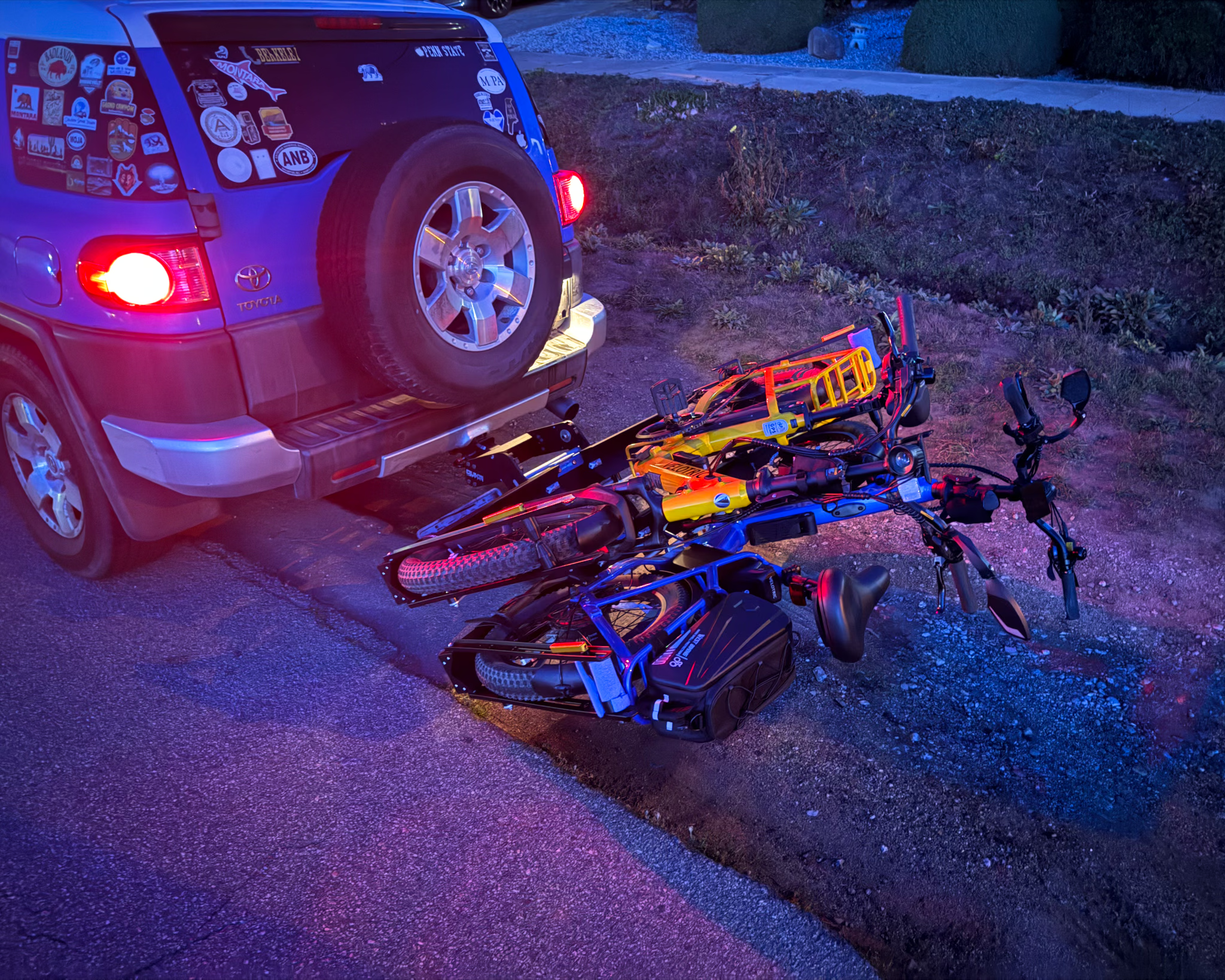
Coming back from a ride with both heavy e-bikes, we heard a loud thump behind the FJ Cruiser, and I immediately pulled over. The rack was, as you see it in this photo I shot from the side of the road, pointing downward in its cargo access position.
Investigating the next day I found that, both with and without the weight of the bikes, the pin and tooth mechanism can malfunction if you are not alert and don’t test the seating of the pin each time you change the rack’s position. Sometimes the pin will be positioned on the tip of one of the teeth rather than in the groove between them, and it will seem solid. You can stand on the rack when the pin is like this. You can load heavy bikes bikes, you can drive for several miles, as I did, until a bump causes the spring-loaded pin to jump a bit and fall into the next lowest groove.
Imagine if I had been on the highway when that happened.
The fix is simple. Push and pull on the rack to make sure that the pin has seated properly. Push and pull on the rack firmly every single time you use it. and if you have the rack and haven’t experienced the issue, start checking—all seems well until it’s not.
A few photos and a video will make the problem clear.
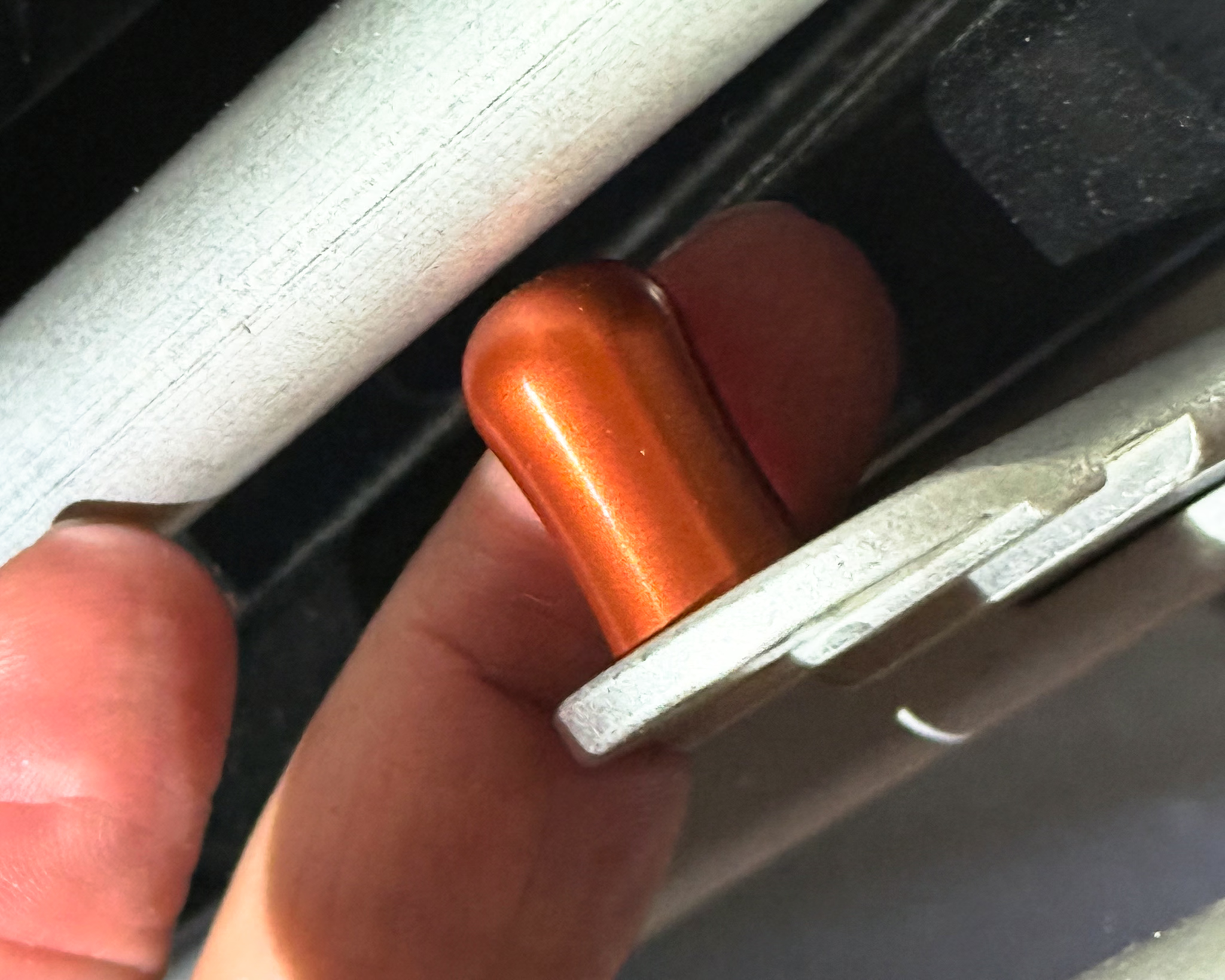
This first shot shows the small, red knob that you have to pull on to slide the locking mechanism open (a spring will attempt to close and lock the mechanism).
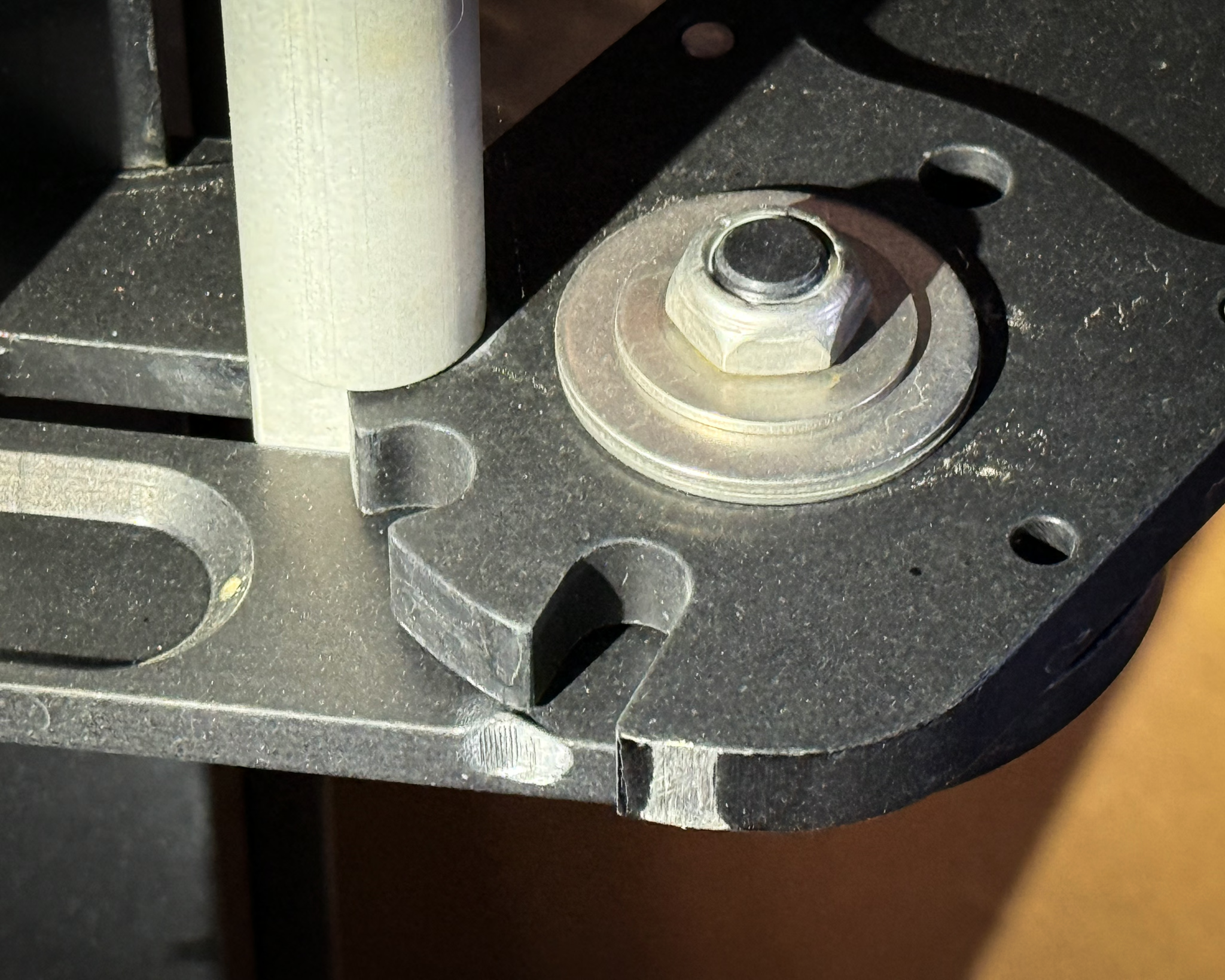
Here are the teeth I mentioned. There are three positions: up (out of the way), horizontal (bikes loaded), and down (cargo access). Note the large, silver locking pen (positioned vertically in this photo with the rack propped up on its side).
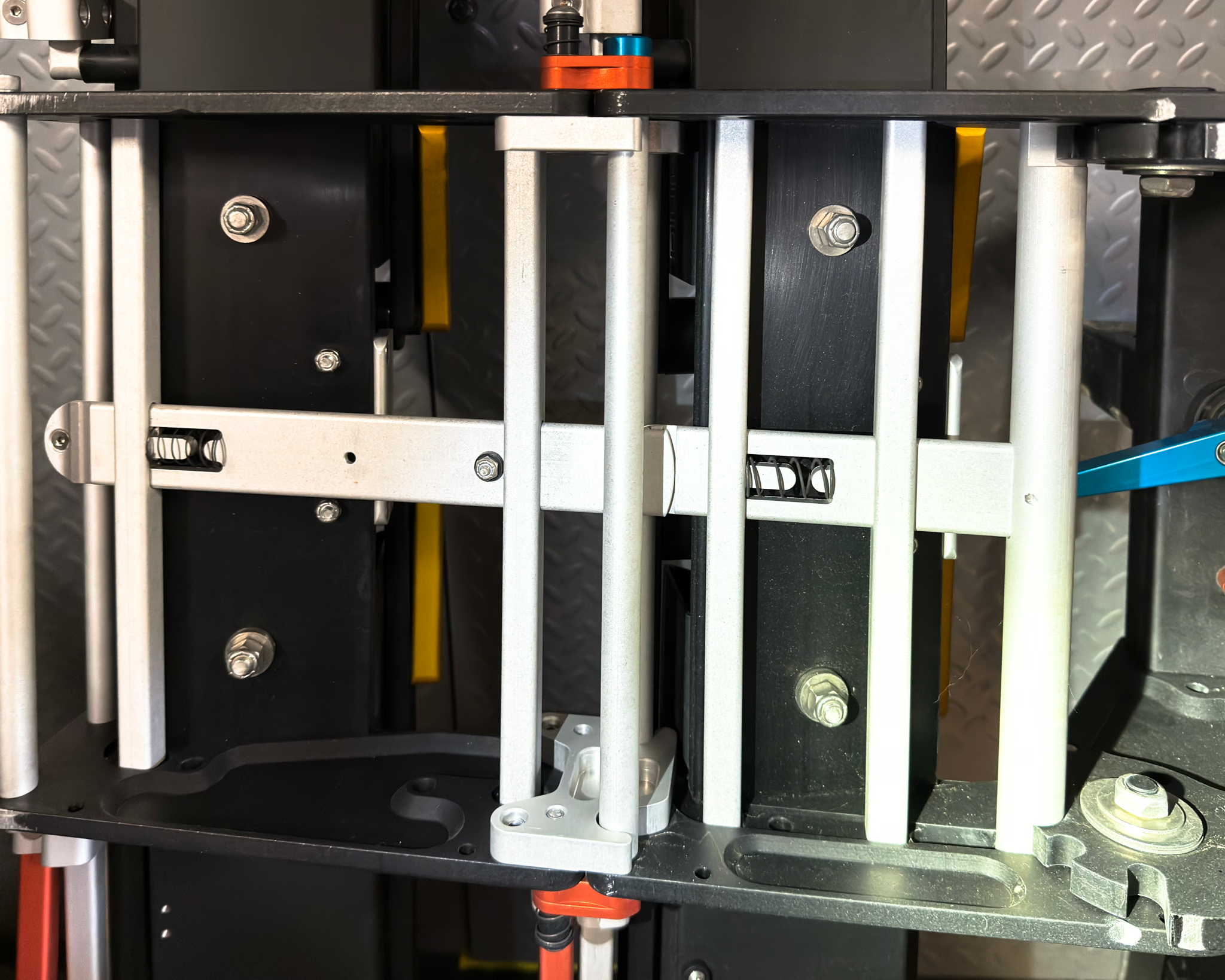
And here is the wider view of the rack, looking up from the bottom so you can see the mechanism more clearly. In this image, the vehicle would be on the right. You’ll see a horizontal, aluminum bar running across the middle of the picture. That’s the bar that reaches from the finger knob to the locking pin. On the far left of that bar, you can see its rounded end and a screw-That screw is the underside of the red finger-knob. On the far right of that bar, you can see that it is attached to a large, round piece of metal. That is the locking pin. This moves left and right (as seen from this view) and pulls the pin out of the grooves between the teeth, which you can clearly see at the bottom right of the photo. You pull the pin, the locking pin is withdrawn from the groove, you move the rack to whatever position you prefer, you release the pin, and the pin (which is spring-loaded) will then lock into one of the other grooves between the teeth. Nice.
How does this work in real life? Here’s a video:
Oh, no. You can clearly see here that the pin is not seating properly into the grooves. Of the five tries shown in the video, the locking pin didn’t fully seat a single time. (When properly attached to the vehicle, the rack will sometimes seem to be locked into place with the locking pin sitting on the edge of or fully on the top of a tooth, which is what I suspect happened to me. I tested the rack on the car, and it was easy to accidentally “lock” it incorrectly.)
The solution, I’ll repeat, is to push and pull on the rack, to essentially give it a shake, a good, strong shake, to confirm the locking pin is seated correctly. Visually confirm if you are in any doubt.
Here’s another guy who had the same problem. According to him, since he is an e-bike influencer, Quikrstuff sent him a new ramp to replace the one that was deeply scratched and bent, despite the damage not qualifying for their warranty. I guess that was enough to make the guy love the rack again. Funny how that works.
Is the Quikrstuff rack well-made? Is it well-engineered? In many ways, yes, but in fundamental ways, a resounding no. I certainly can’t trust it.