Days until our Noovo delivery:
I have two daughters. When the second one left for college, I started keeping a journal. My journals (plural, as it would turn out) were small, bright orange, “Expedition” notebooks made by Field Notes. They are made of some sort of plasticky paper that is weatherproof and I wrote in them with pencil since the ink of my pens wouldn’t dry fast enough. I wrote in them every day, and I kept it going for five hundred days without missing a day.
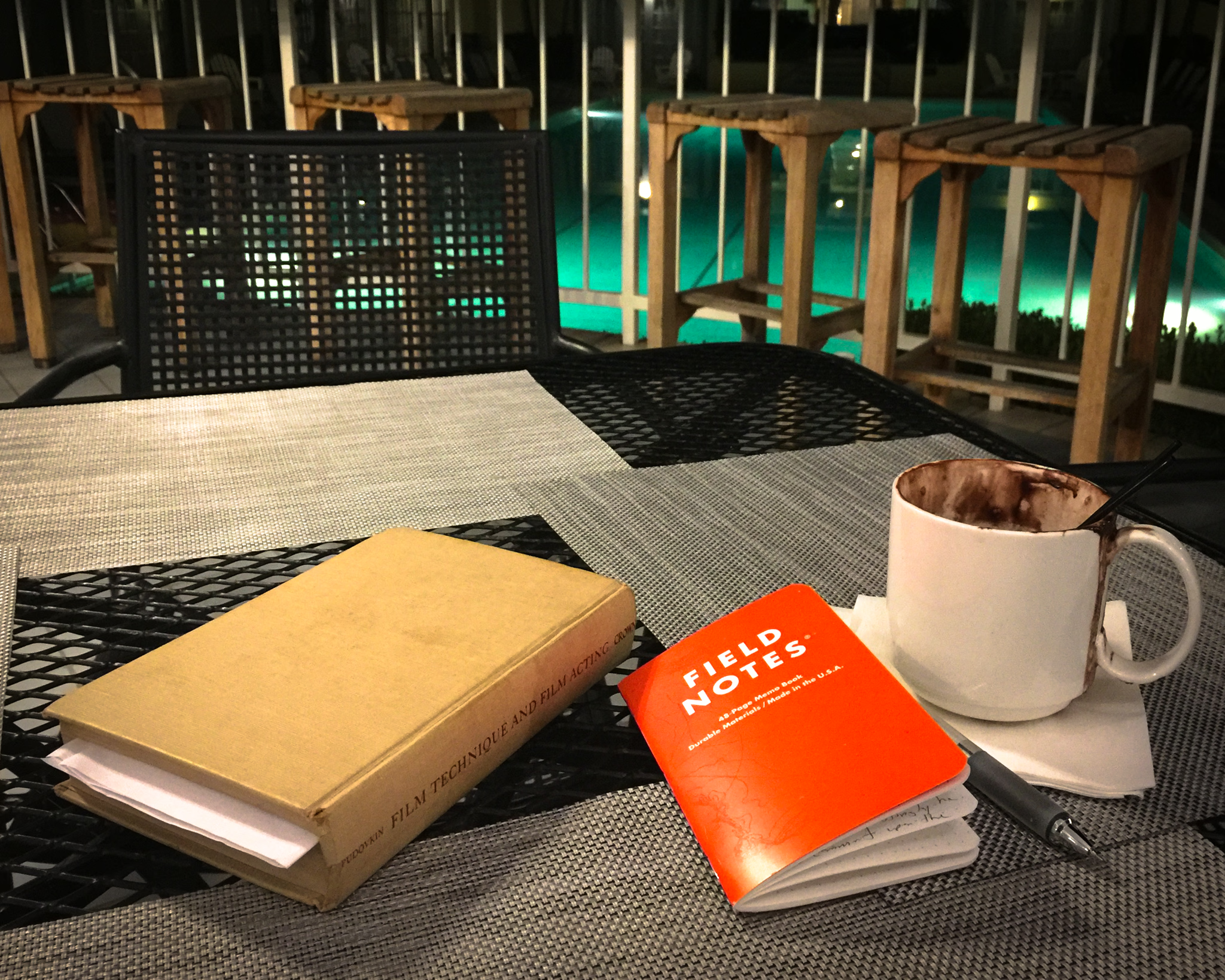
Some people are natural diarists. I have to work at it. My journals don’t have multiple colors or stickers, like everyone seems to do now. Mine were just simple text entries, capturing my thoughts as my wife and I entered that new “empty nest” phase of our lives.
I have a box full of those expedition journals, each labeled in Sharpie on the cover with the date range. They aren’t diaries, they aren’t a chronicle of my daily activities, or some way to secretly vent my frustrations and dream my dreams. They are more about whatever I was thinking about at the time.
If you think about our brains as a computer (which it is, of course) and that our brain has a certain amount of memory storage, then you might think of books and magazines and journals as external memory storage. No one could ever memorize everything on Wikipedia, for example, but yet, like a computer, if I need something, I can go look it up. The process of journaling seems to act like a semi-external processing function, to sort of think on paper, if you see what I mean. You might not ever read your journal entries again, but the very process of writing the entry seems valuable in order to think better about what you are thinking about.
A while back, I made a series of videos featuring typewriters and part of that project was about this process. What I would talk to people then about was the idea of a buffer in the brain, that is a kind of short-term memory which features writing longhand and when I use typewriters (since I am slow) and much less so when typing on a computer keyboard (where I am much faster). My observation is that when you are writing, especially creative writing, you are thinking a little bit ahead of what you are writing or typing. For example, as I started that last sentence, typing “My observation,” it occurred to me that I should write “especially creative writing” even though I wasn’t that far into the sentence yet. This short-term memory I call “the buffer” and it seems clear that the brain is not just storing the information, it is processing the information, working on it, testing out ideas, suggesting new directions.
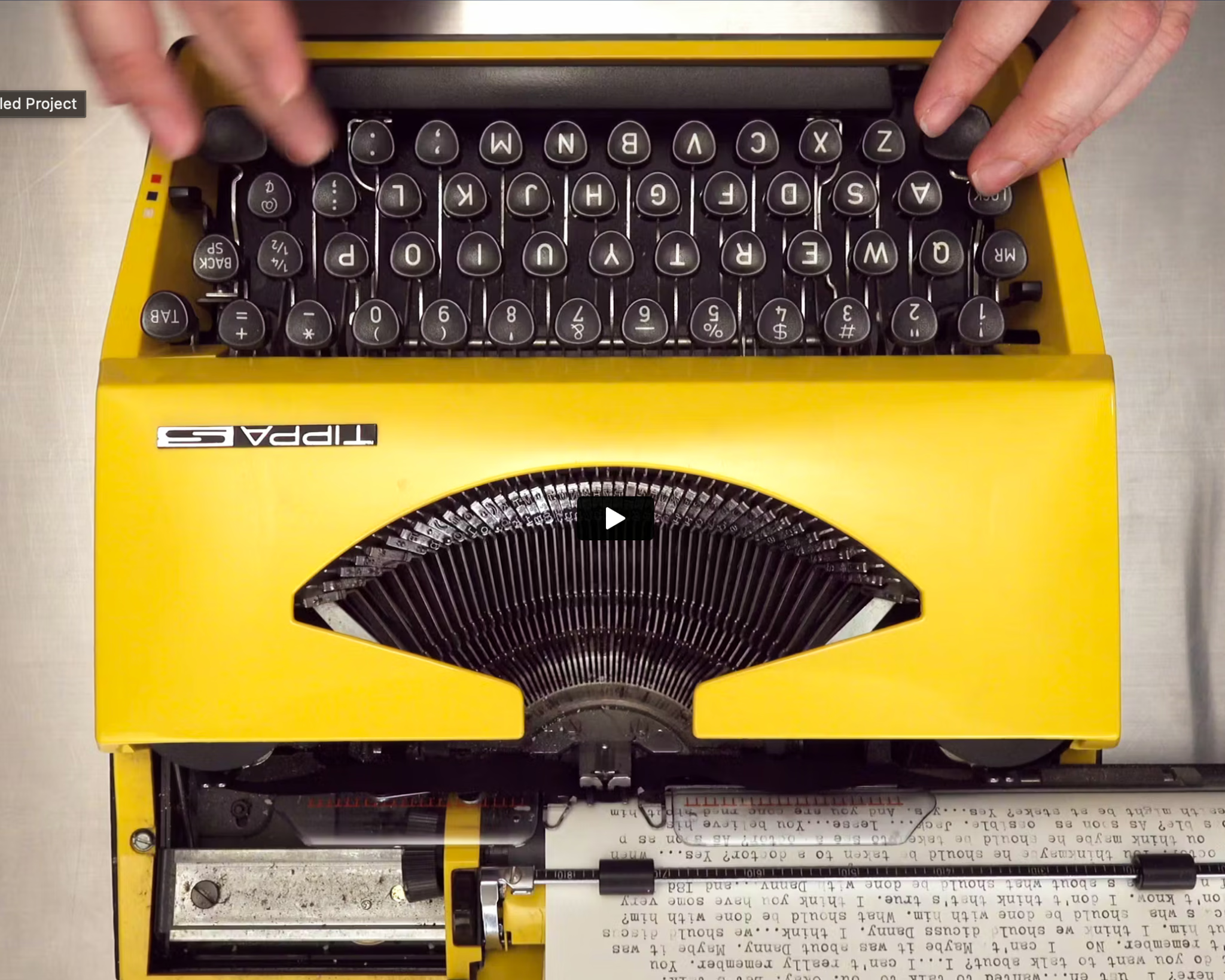
Slow writing would seem to have a larger buffer. Fast writing would seem to have a smaller buffer.
All of which is a long way to say that I found writing those five hundred journal entries deeply rewarding, though I have them packed away in my garage and I never read them again, except perhaps to mine them for photo ideas that I wrote about now and again as they occurred to me.
Four years later, in 2020, my daughters were back at the house. COVID reversed things for us a bit, making us non-empty nesters again for a while. I kept a journal during this time but only intermittently. There was too much else to do and no real time to think alone, to gather one’s thoughts to write something worth writing, to think deeply on paper about something worth thinking deeply about.
But then, in 2022, with our daughters once more out of the house, I restarted my journaling. I kept it going for something like one hundred and seventy-five days this time.
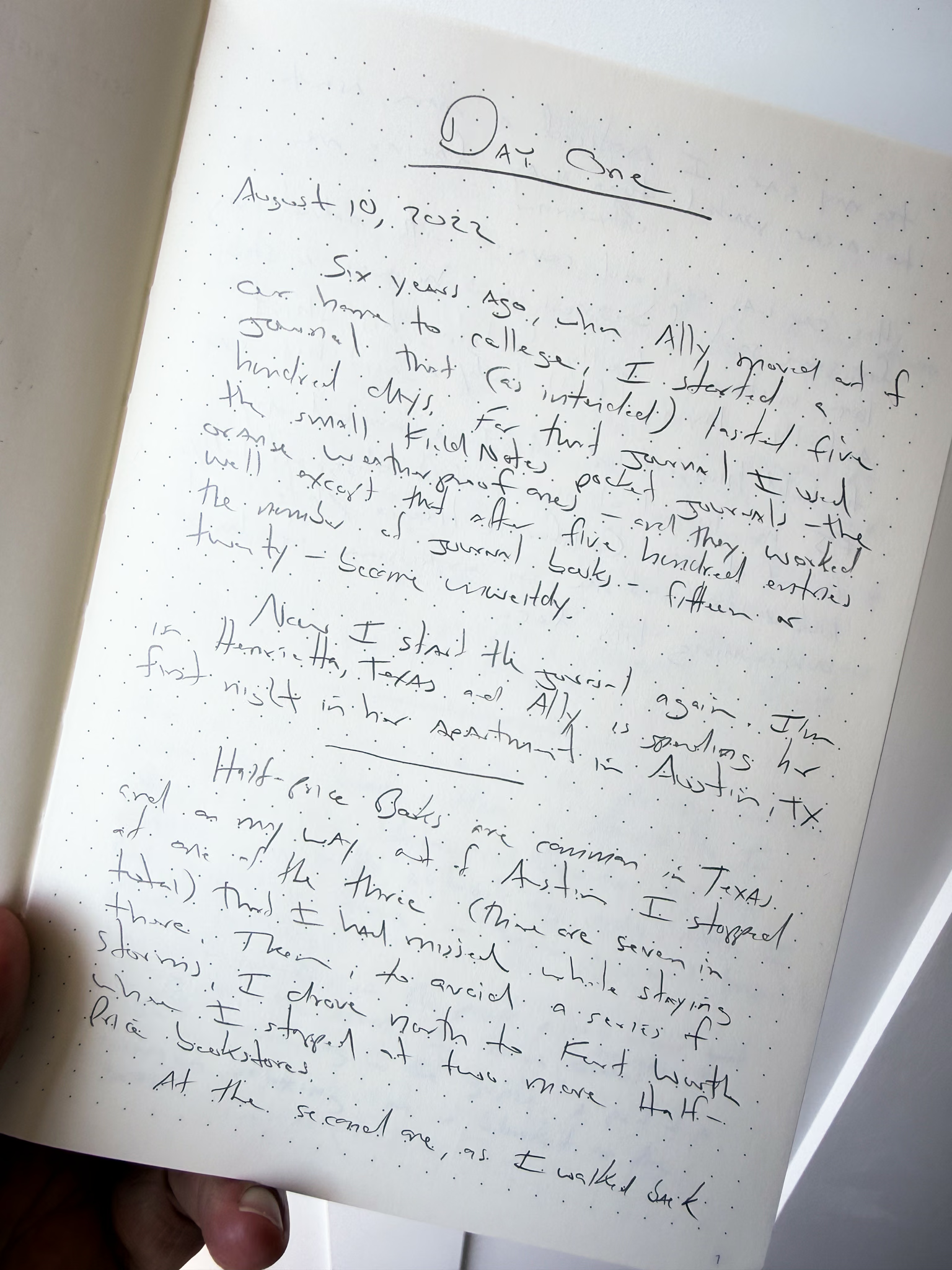
Now, four years later, with big changes underway in our lives, we are beginning again, yet again. It’s a time to restructure our lives, to restructure our time, do those things that matter to us, and to push the other stuff as far away as possible. It’s time to think about things, it’s time just to think for the pleasure of thinking. It’s time, again, to journal.