

This post is the first in a series on travel books.
Alain de Botton, a British writer, born in Switzerland and educated to be a philosopher before he turned to writing books for a more general audience, sets out his task clearly enough in the opening to his 2002 work, The Art of Travel:
If our lives are dominated by a search for happiness, then perhaps few activities reveal as much about the dynamics of this quest—in all its ardour and paradoxes—than our travels. They express, however inarticulately, an understanding of what life might be about, outside of the constraints of work and of the struggle for survival. Yet rarely are they considered to present philosophical problems— that is, issues requiring thought beyond the practical. We are inundated with advice on where to travel to, but we hear little of why and how we should go, even though the art of travel seems naturally to sustain a number of questions neither so simple nor so trivial, and whose study might in modest ways contribute to an understanding of what the Greek philosophers beautifully termed eudaimonia, or ‘human flourishing’.
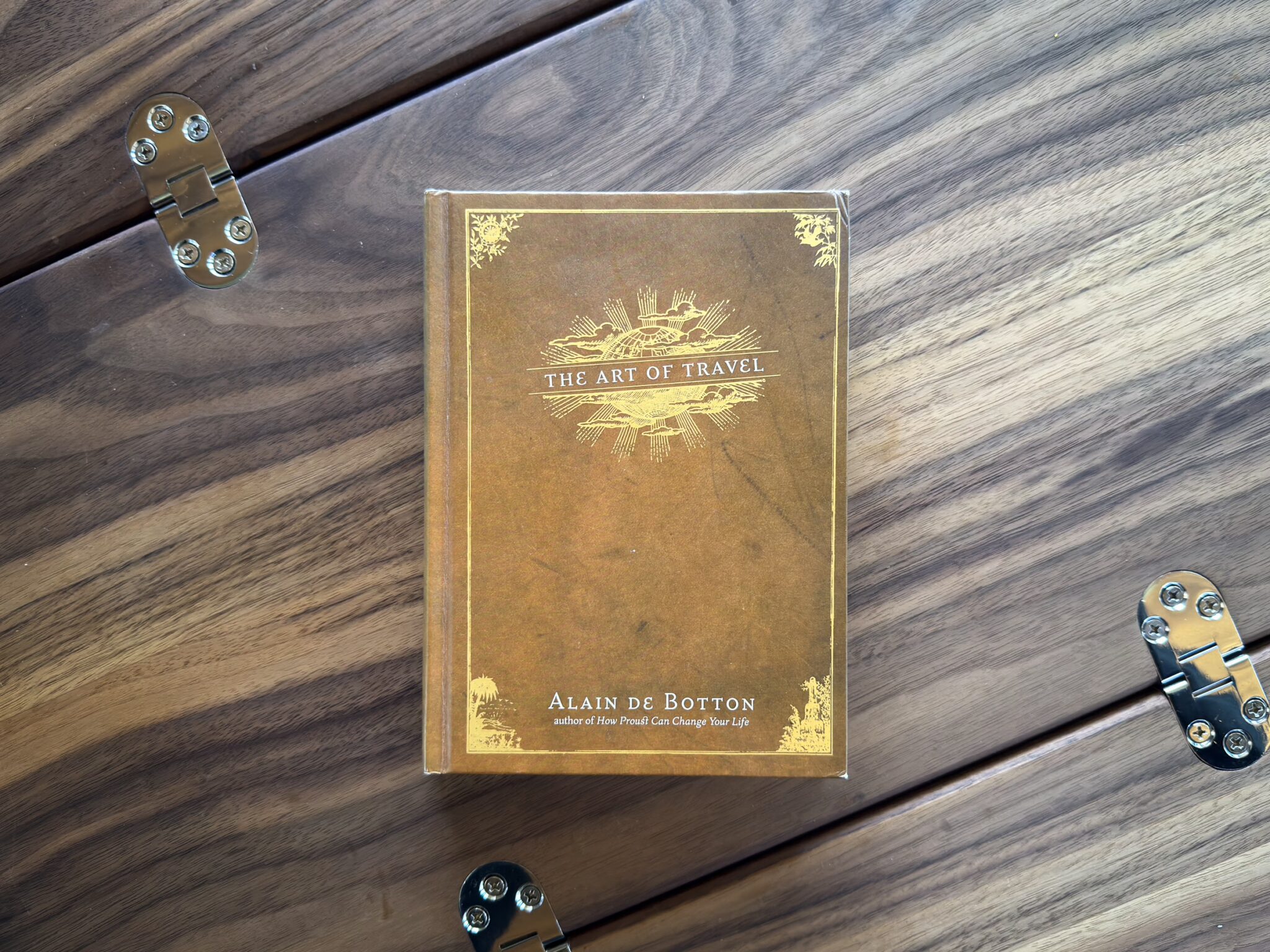
De Botton, as I have suggested, is an intellectual and he writes like an intellectual, but he writes well and cleverly and he usually has something to say. In The Art of Travel, he takes you on a tour not only of various locations around the world, but he does so with different “tour guides” for each destination– philosophers and writers and poets and painters and an explorer, too–using each as a mirror to react to as he describes and experiences each new place.
He gets off to a bit of a rocky start in his explorations with a trip to Barbados, having a hard time relaxing, having difficulties in reconciling the Barbados of the travel agency brochures and of his imaginings with the reality of the island and the actual experience of traveling:
I found a deck chair at the edge of the sea. I could hear small lapping sounds beside me, as if a kindly monster were taking discreet sips of water from a large goblet. A few birds were waking up and beginning to career through the air in matinal excitement. Behind me, the raffia roofs of the hotel bungalows were visible through gaps in the trees. Before me was a view that I recognised from the brochure: the beach stretching away in a gentle curve towards the tip of the bay, with jungle-covered hills behind, and the first row of coconut trees inclining irregularly towards the turquoise sea, as though some of them were craning their necks to catch a better angle of the sun.
Yet this description only imperfectly reflects what occurred within me that morning, for my attention was in truth far more fractured and confused than the foregoing paragraphs suggest. I may have noticed a few birds careering through the air in matinal excitement, but my awareness of them was weakened by a number of other, incongruous and unrelated elements, among them a sore throat I had developed during the fight, worry over not having informed a colleague that I would be away, a pressure across both temples and a rising need to visit the bathroom. A momentous but until then overlooked fact was making itself apparent: I had inadvertently brought myself with me to the island.
And indeed he has, filtering everything he sees, hears, thinks and feels through his anxieties and his wry, self-deprecating humor. We are reading about the art of travel in more ways than expected.
De Botton relates many good stories, such as that of the fictional Doc des Essences, who lived alone near Paris and took an interest in travel and read stories of London and stared longingly at paintings of the Dutch countryside, and even made an some effort to travel to these places, though recognizing that he ultimately enjoyed only certain aspects of travel and why bother with the rest.
The book is divided into sections, each a writing prompt, organized by the principles of the Chicago Manual of Style, or its English equivalent:
Contents
DEPARTURE
I On Anticipation
II On Traveling Places
MOTIVES
III On the Exotic
IV On Curiosity
LANDSCAPE
V On the Country and the City
VI On the Sublime
ART
VII On Eye-Opening Art
VIII On Possessing Beauty
RETURN
IX On Habit
And you can get the feel of the book already. Though it may seem a bit wordy and over-intellectualized at first, The Art of Travel doesn’t fail to produce what it promised: a deep dive into why we travel, at least philosophically. There’s no discussion of packing cubes here, or recommended hotels, or even favored destinations, as the ones de Botton travels to seem a bit random and certainly not matching any special interest of his other than they be varied. But there is a lot about the experience of travel, the experience of the experience, and the value it has to us as thinking human beings.
It’s a worthwhile book but it is the penultimate chapter that sticks so clearly in my mind, though I last read this book some eight or ten years ago. The chapter’s destination list is long: The Lake District, Madrid, Amsterdam, Barbados (again!), and the London Dockyards, and our guide for all of this is John Ruskin, a writer of art criticism and history, who died in 1900, and whose ideas and words are still fresh today.
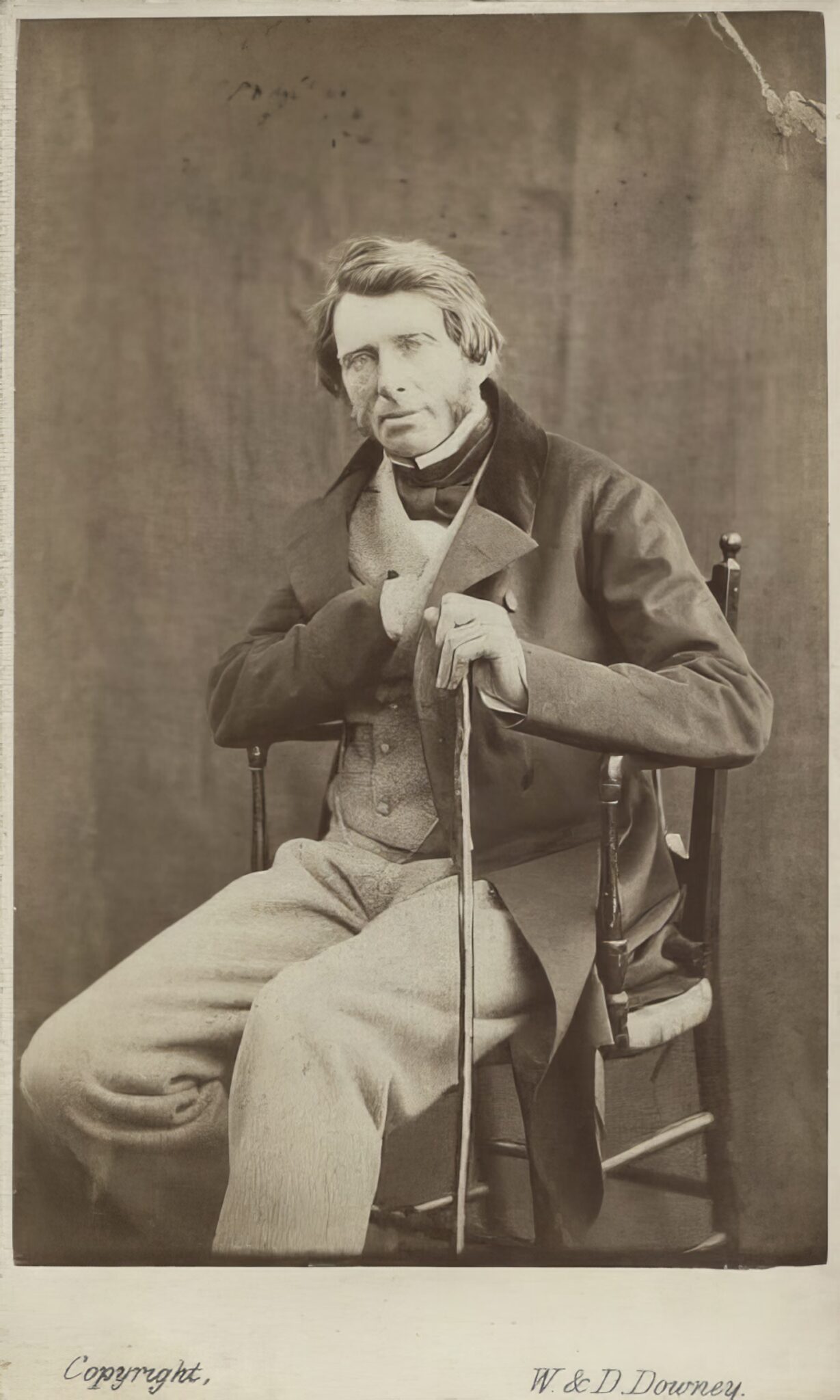
The chapter, On Possessing Beauty, is the gem of this book, which otherwise sparkles in so many different ways, and lays out Ruskin’s ideas on art and life better than Ruskin himself ever did. Ruskin, amongst his many other endeavors, opened a school for the working men and women of industrializing England, whose lives, he felt, were being diminished by the vast changes occurring in the economy. His book on drawing, The Elements of Drawing, is still in print today, and its goal was simple: To teach people (workers) to draw not that they would become artists, or even that they would suddenly begin visiting the art museums of the world with newfound gusto, but to teach them to draw so that they could then better see, and better experience, the world around them and all of its beauty:
Summing up what he had attempted to do in four years of teaching and writing manuals on drawing, Ruskin explained that he had been motivated by a desire to ‘direct people’s attention accurately to the beauty of God’s work in the material universe. It may be worth quoting here in full a passage in which Ruskin demonstrated exactly what, at a concrete level, this strange-sounding ambition might involve: Let two persons go out for a walk; the one a good sketcher, the other having no taste of the kind. Let them go down a green lane. There will be a great difference in the scene as perceived by the two individuals. The one will see a lane and trees; he will perceive the trees to be green, though he will think nothing about it; he will see that the sun shines, and that it has a cheerful effect; and that’s all! But what will the sketcher see? His eye is accustomed to search into the cause of beauty, and penetrate the minutest parts of loveliness. He looks up, and observes how the showery and subdivided sunshine comes sprinkled down among the gleaming leaves overhead, till the air is filled with the emerald light. He will see here and there a bough emerging from the veil of leaves, he will see the jewel brightness of the emerald moss and the variegated and fantastic lichens, white and blue, purple and red, all mellowed and mingled into a single garment of beauty. Then come the cavernous trunks and the twisted roots that grasp with their snake-like coils at the steep bank, whose turfy slope is inlaid with flowers of a thousand dyes. Is not this worth seeing? Yet if you are not a sketcher you will pass along the green lane, and when you come home again, have nothing to say or to think about it, but that you went down such and such a lane?’
And that, for me, is much of the art of travel. By exposing us to unfamiliar sights, unfamiliar places, travel–deeply experienced travel–allows us to see life fresh again, to feel the pleasure of just being, to observe the world in all its details more slowly, and to be as we had not been before.