

Every beach has its own character, its own personality. Montara Beach, the beach at the edge of the town where I live, is known for its powerful surf, coarse sand, and Montara Mountain, which rises above it and slides into the ocean just north. Surfer’s Beach, just down the road, is the place you go to learn to surf, its shoreline partially protected by a large promontory.
San Gregorio Beach, about a half hour south of Montara, has a wilderness vibe, despite the tall bridge that dominates the shoreward view. The beach is crowded with enormous driftwood, many nearly full-sized trees. Some of this wood has been erected into makeshift huts reminiscent of some long-lost civilization. Who (or what?) erects these mysterious structures is a mystery to me, as I’ve never seen one being built, repaired, or even lived in.
At the north end of this beach, the bluff juts toward the ocean, pointing at the waves, almost. When the tide is low, you can walk around this point and onto the beach beyond, but if you wait too long, the water will come back up, trapping you on the other side. You could, of course, walk up a trail onto the tall bluff tops, but all of that land up there is private property, and trespassers are not welcome.
Until now.
On July 29th, this area north of San Gregorio State Beach opened to the public, the result of efforts by the local conservation organization, POST, and the owners of the property. The northern beach now has easy land access and the promise of hiking trails at some future point through the property. And what a property!
Lori and I visited on the 30th, and I made a few photos.
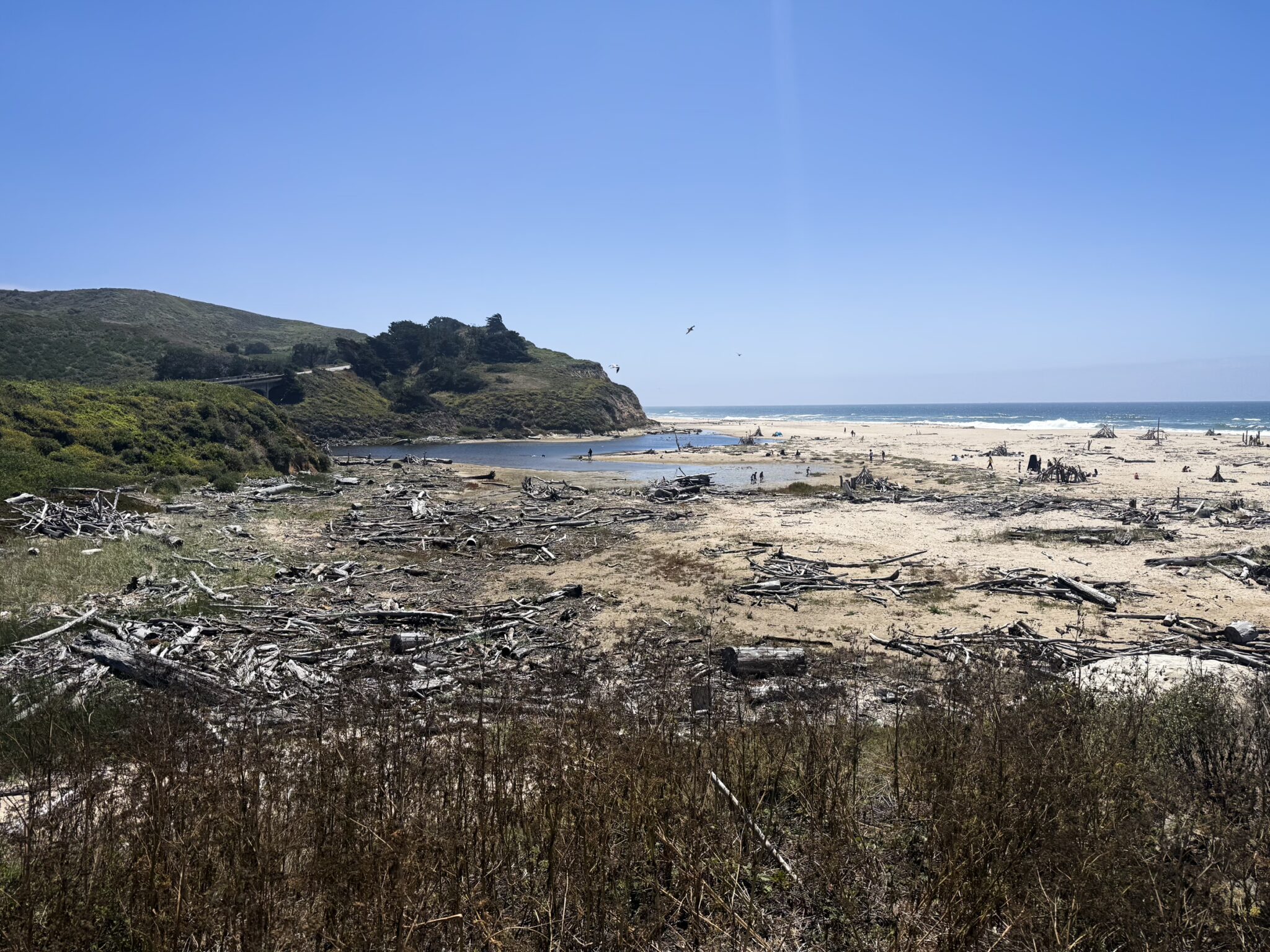
So much driftwood! It seems some of it comes from San Gregorio Creek (which looks more like a small river) as the river banks erode and trees topple in, and from trees expelled into the ocean by other nearby rivers, which then collect here. Normally there are few, if any, people on this beach, but on the day we visited it was (at least by San Gregorio standards) overrun with tourists.
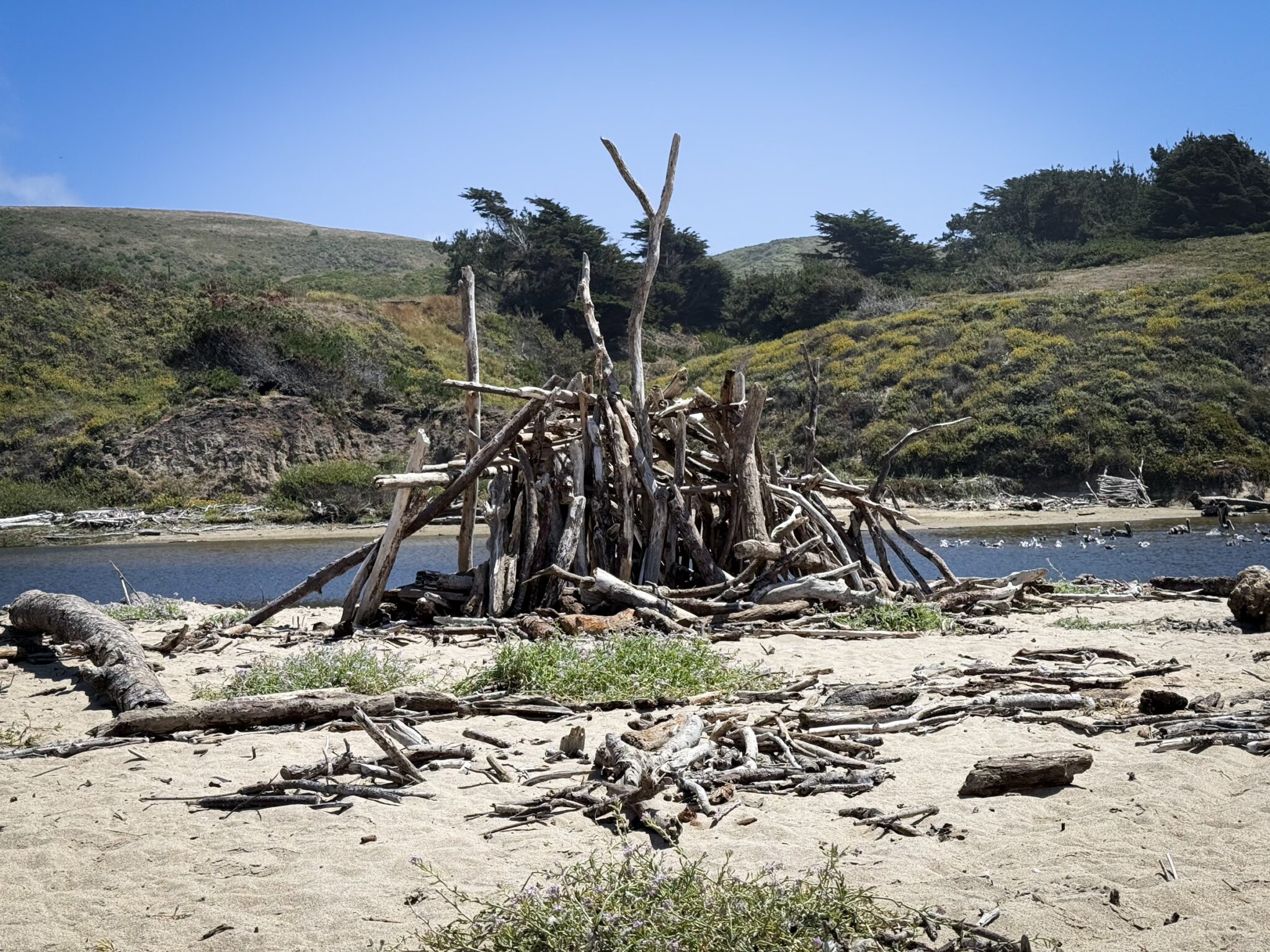
The driftwood huts are fascinating, the feeling they give is one part hippie craziness and one part primeval civilization, a place dangerous and unknowable.
Pelicans and seagulls bathe and rest here, forming clusters on the shore and around the slow-slowing San Gregorio Creek, which can flow here in reverse depending on the tides.
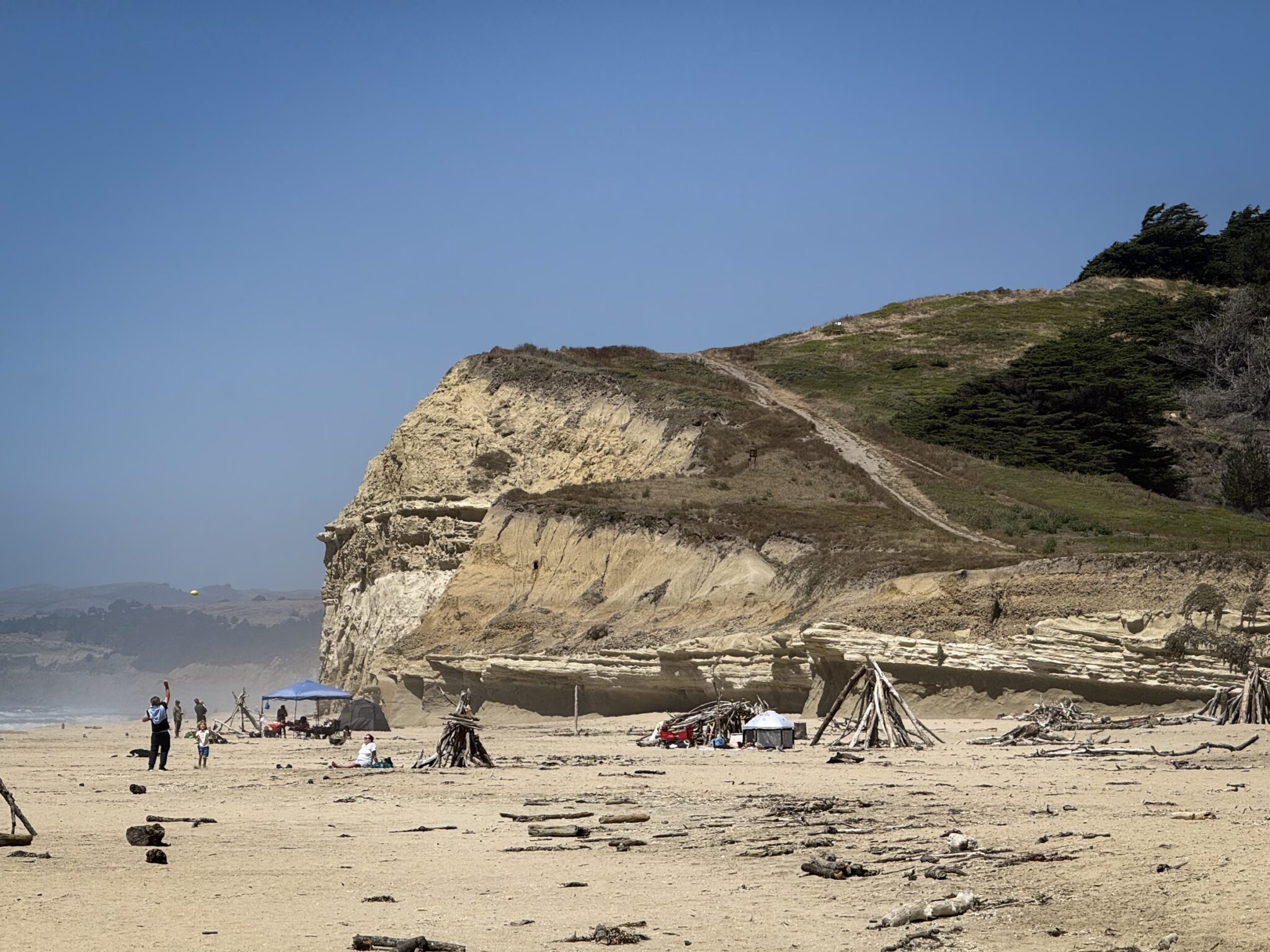
The north end of the beach. Cross around that point and you might be trapped beyond by the tides. The trail going up the bluff would soon, in the past. have taken you to a fence and private property signs.
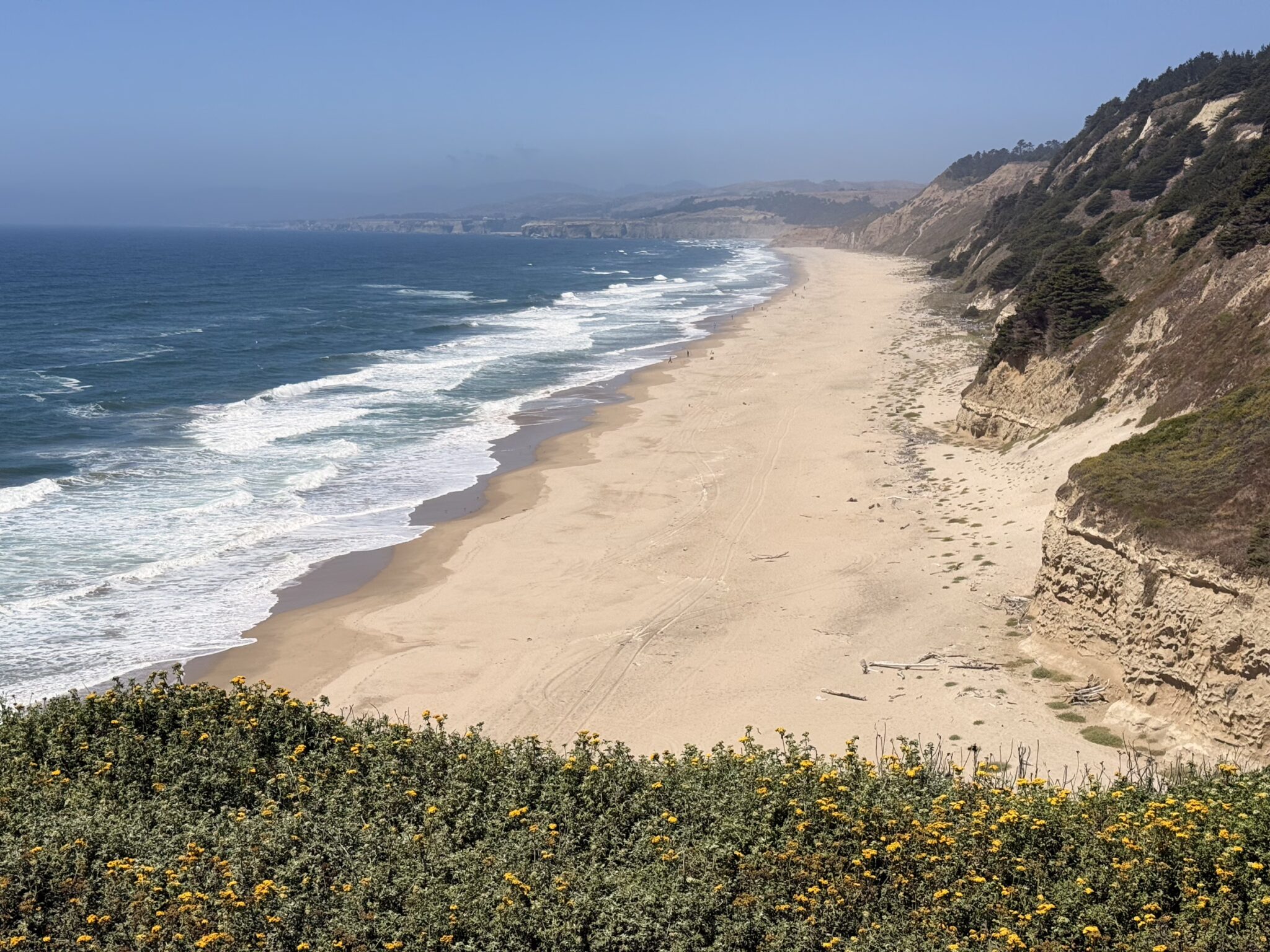
The semi-accessible beach just north of the San Gregorio State Beach boundaries. In California, the beach up to the high tide line is public property–but you still have to get there.
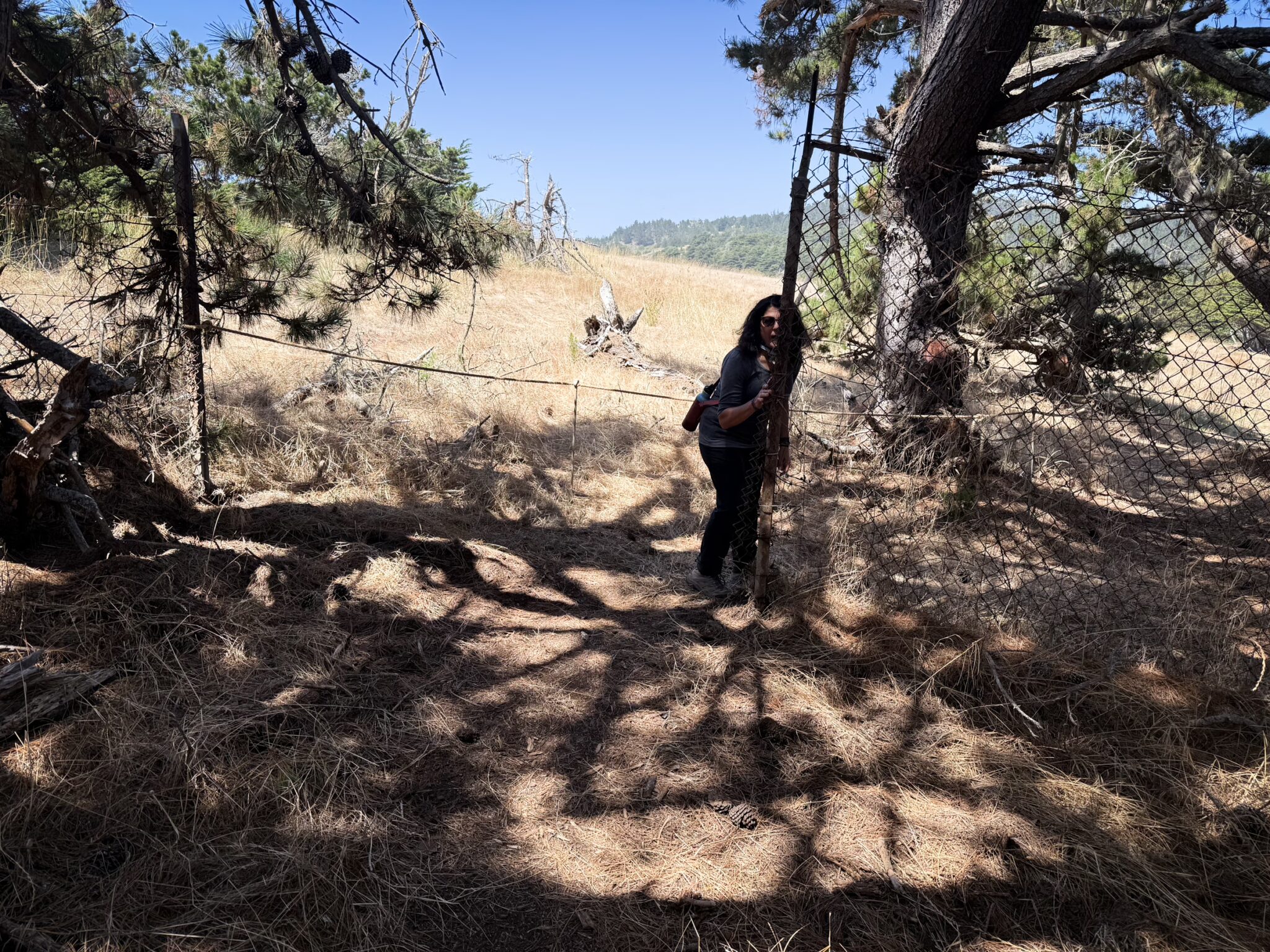
Walking up the trail and beyond. Two weeks ago, on our last trip here, a fence block the trail. Today a section of the fence was gone. Lori was one of the first people to cross into the new property!
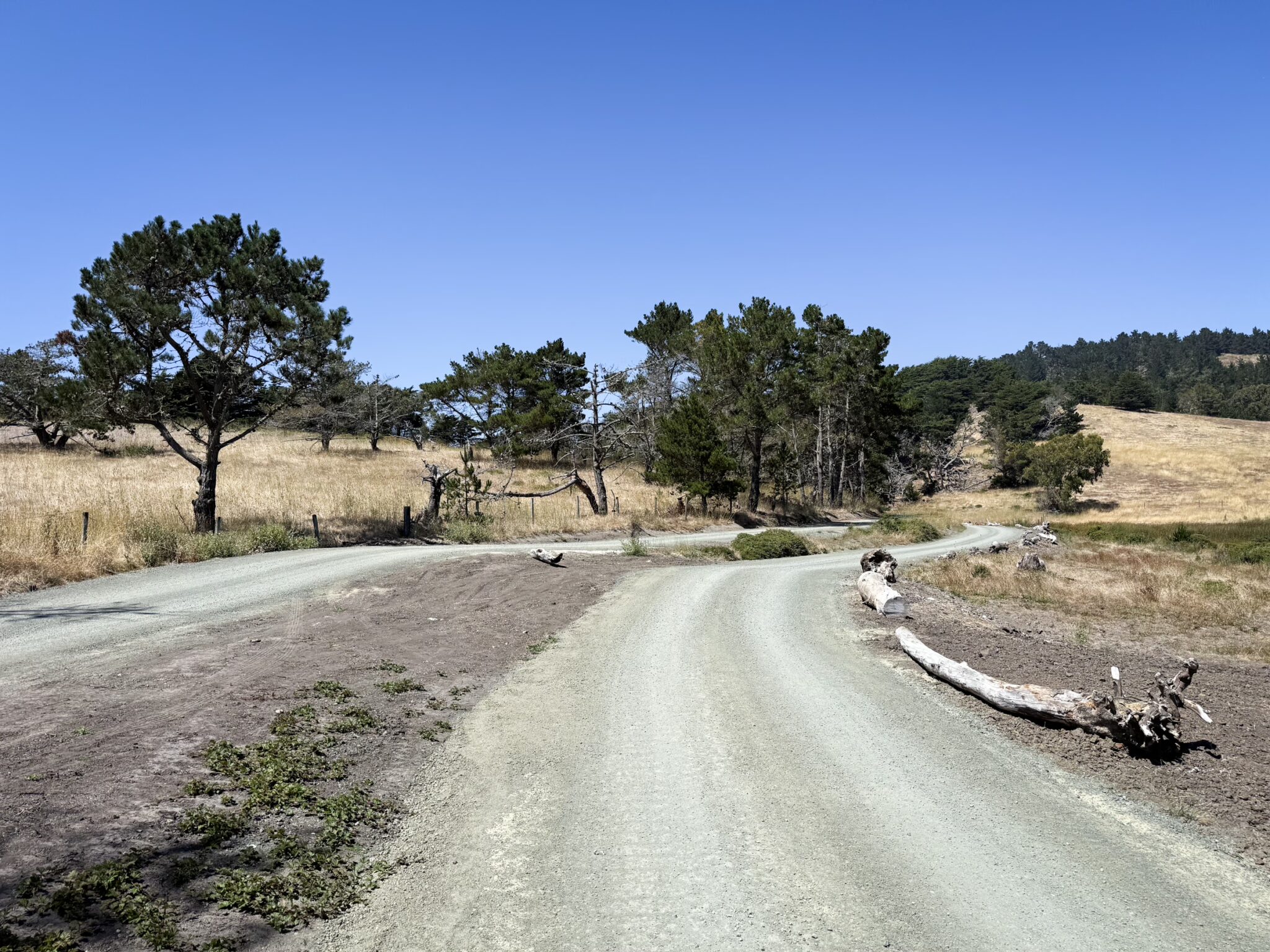
A road winds its way up to a semi-complete parking area atop the bluffs. It has its own entrance, about five hundred feet north of the main San Gregorio Beach entrance, off Highway One.
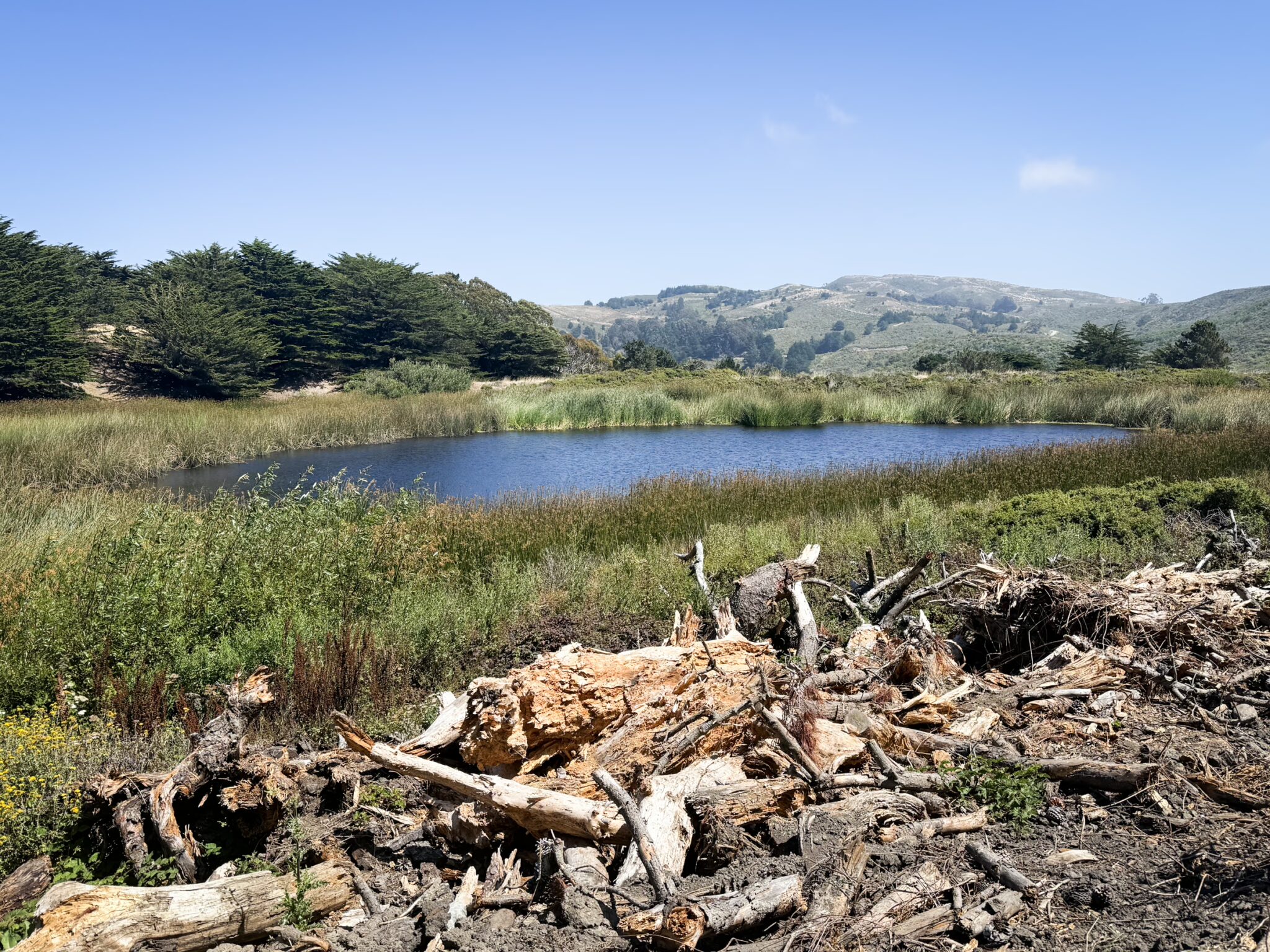
The views along the road are lovely–I am very much looking forward to hiking access to the land.
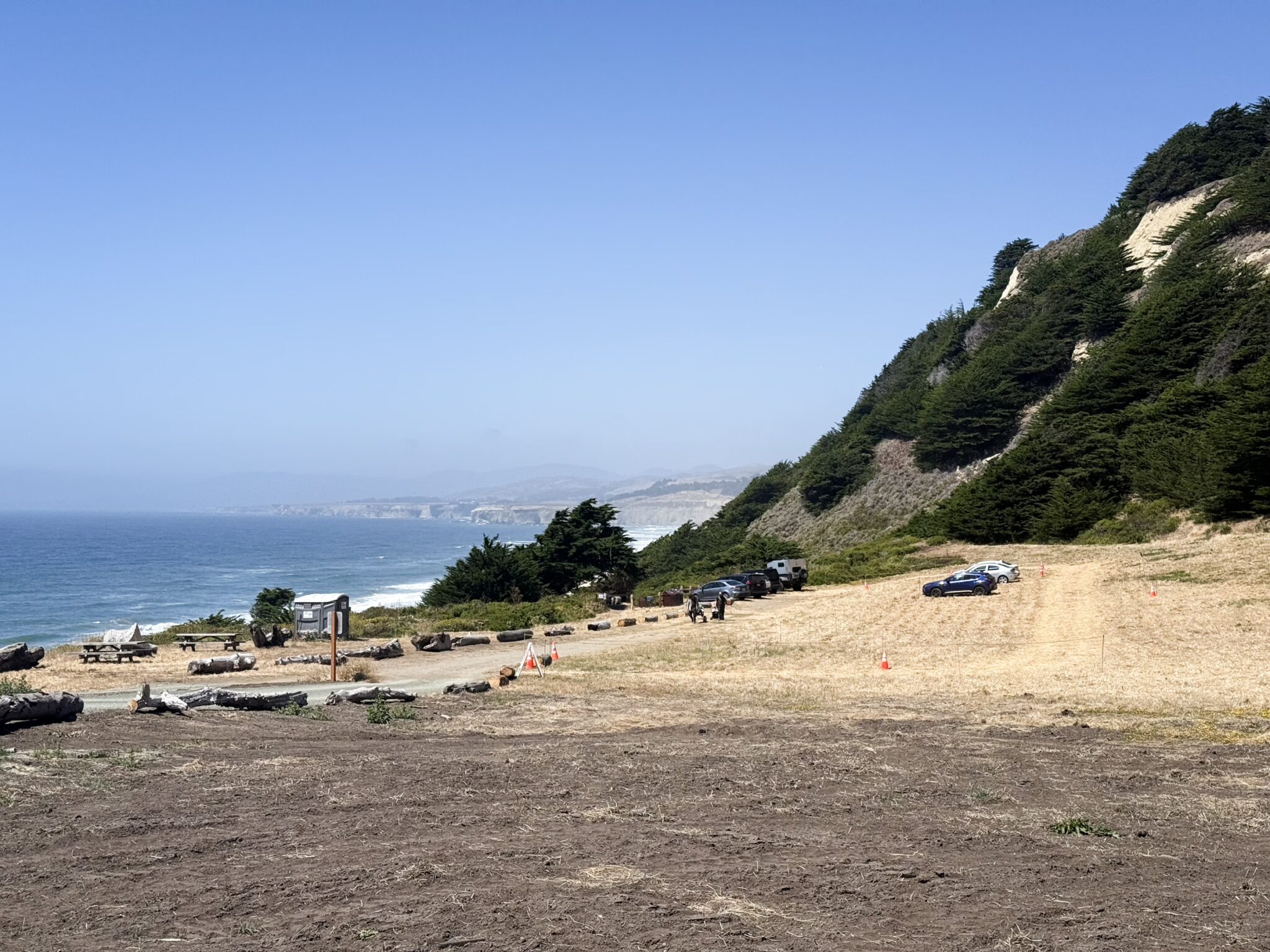
There’s plenty of parking, and plenty of parking for camper vans. There’s an additional paved parking area a hundred feet behind the camera which is also suitable for longer vans.
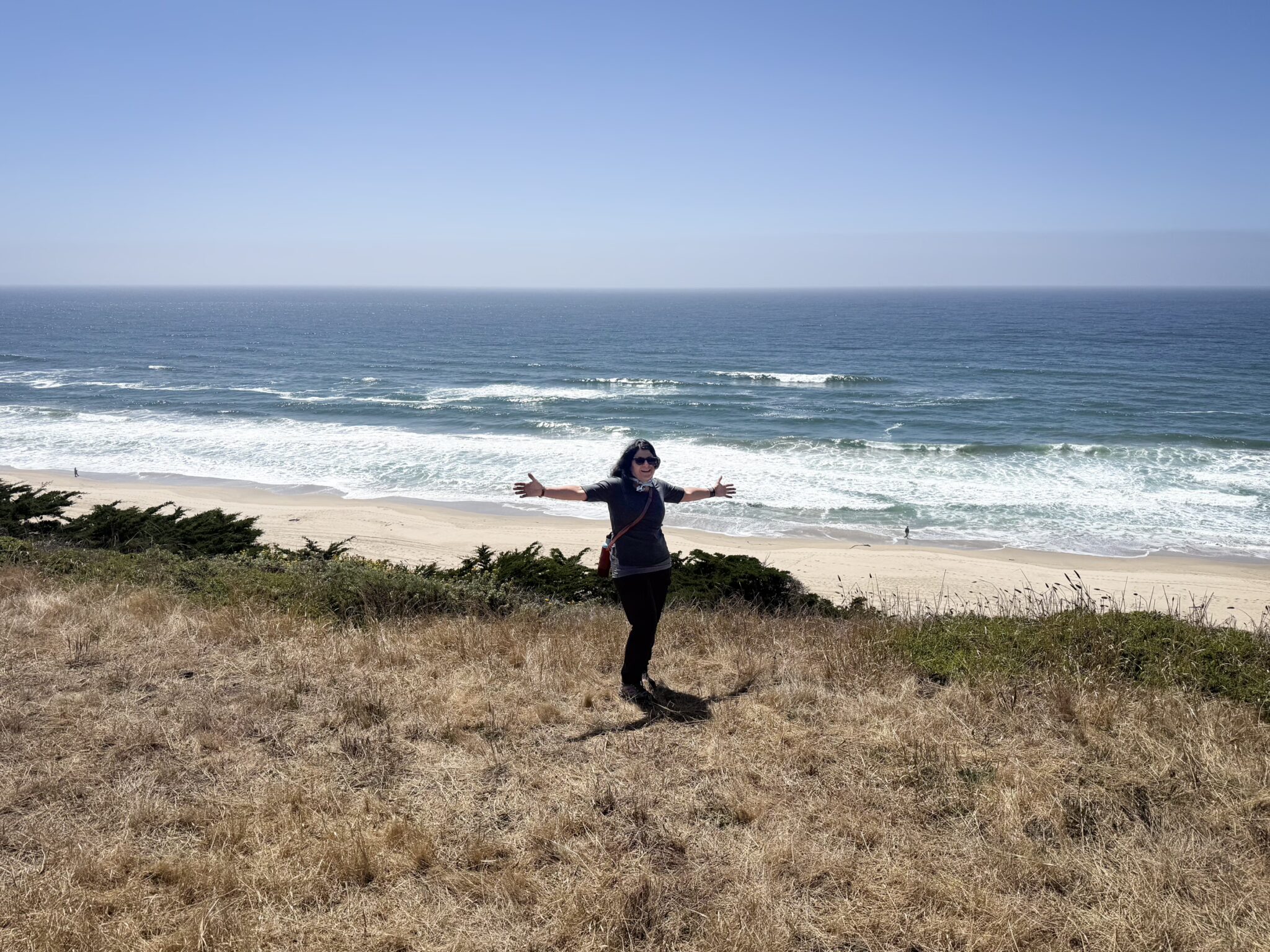
And we are here, overlooking the ocean from this vantage point for the first time.
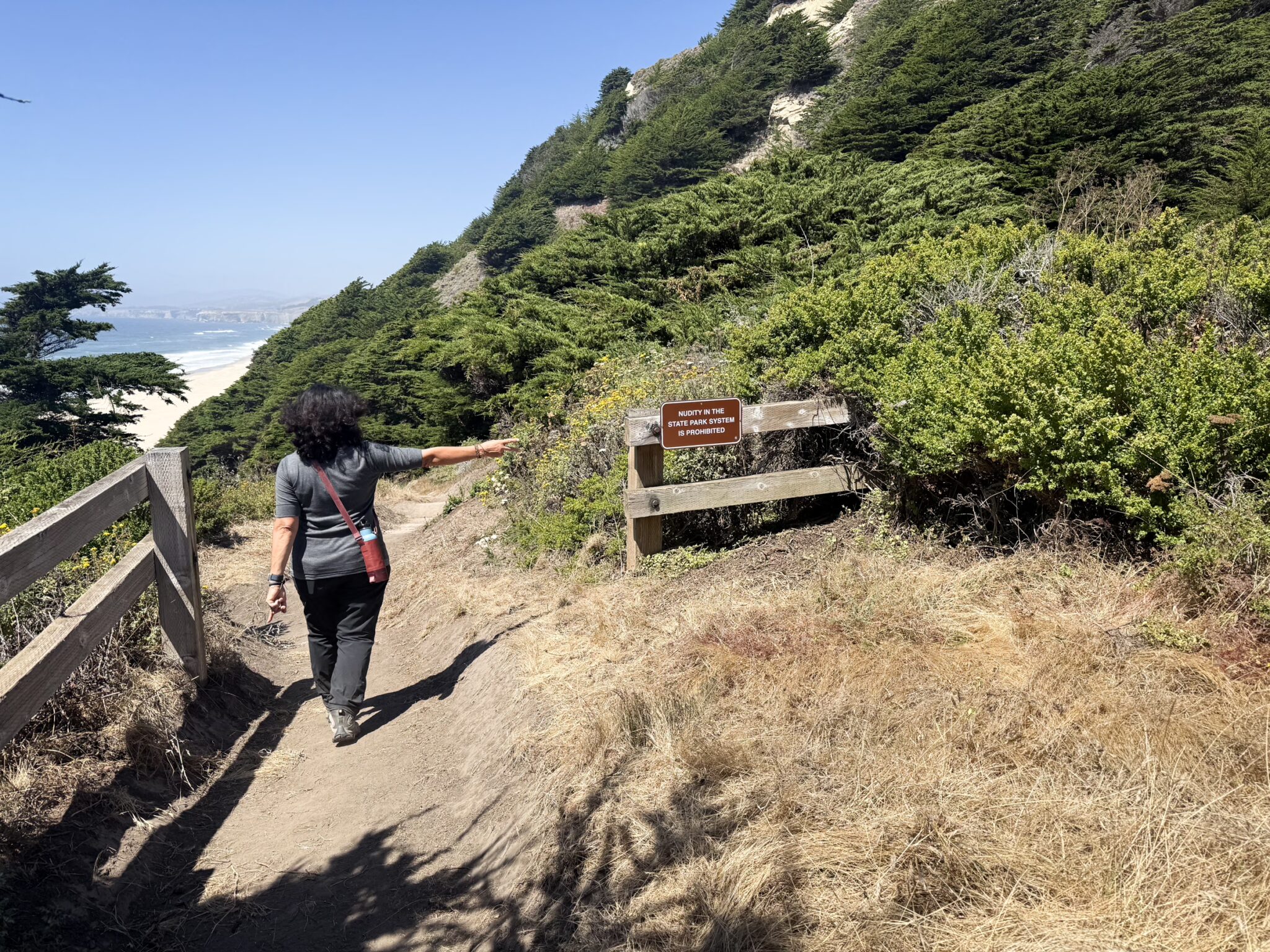
This is a new beach, in many ways, but it used to be an informal nude beach. It may still be–I don’t think the California State Parks have authority beyond the high-tide line.
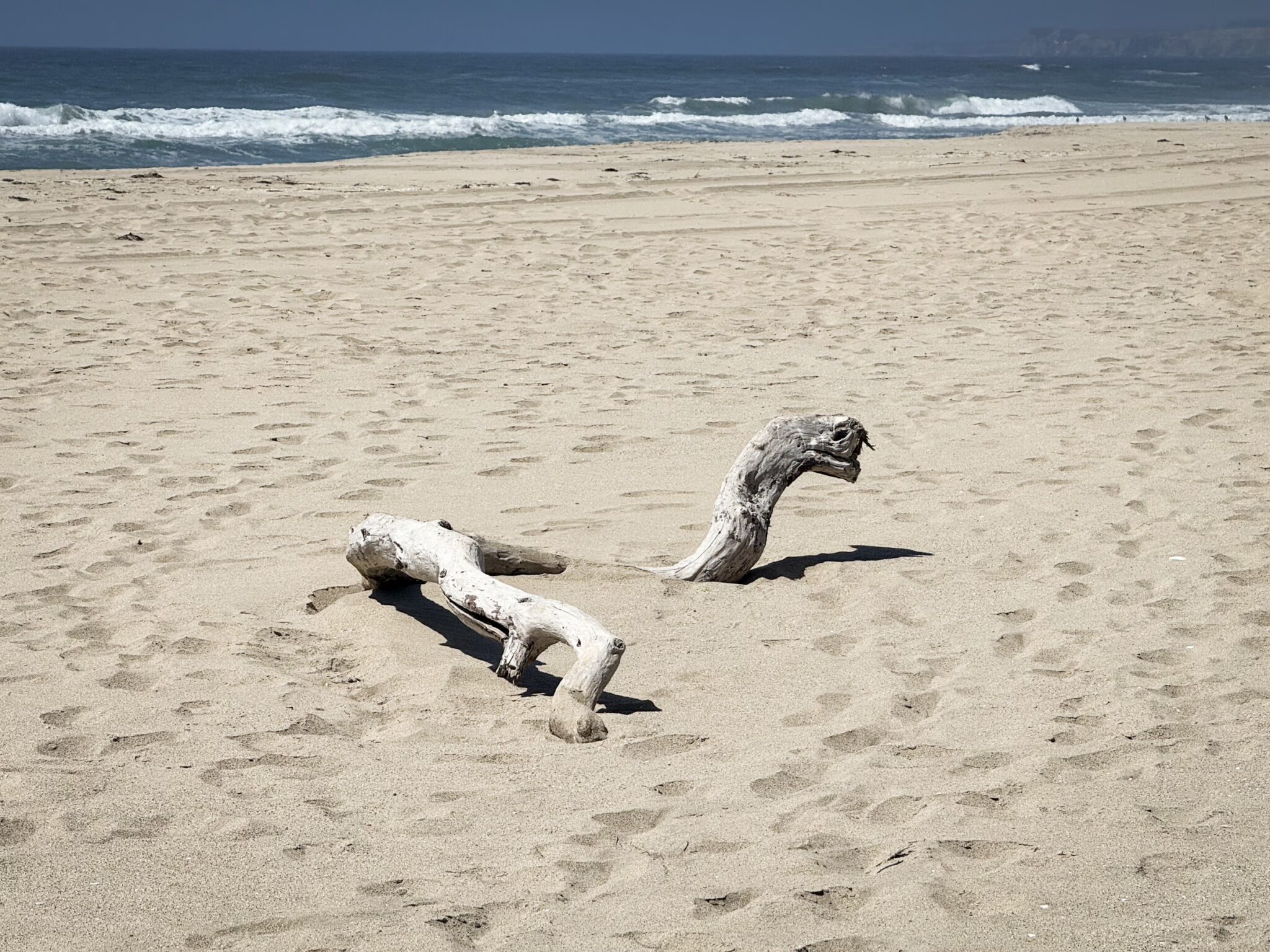
The beach has an unexplored, mysterious nature. It was not surprising at all that we immediately ran into the mythical sand snake (Cartoonus Serpens Driftwoodicus), an encounter we thankfully survived.
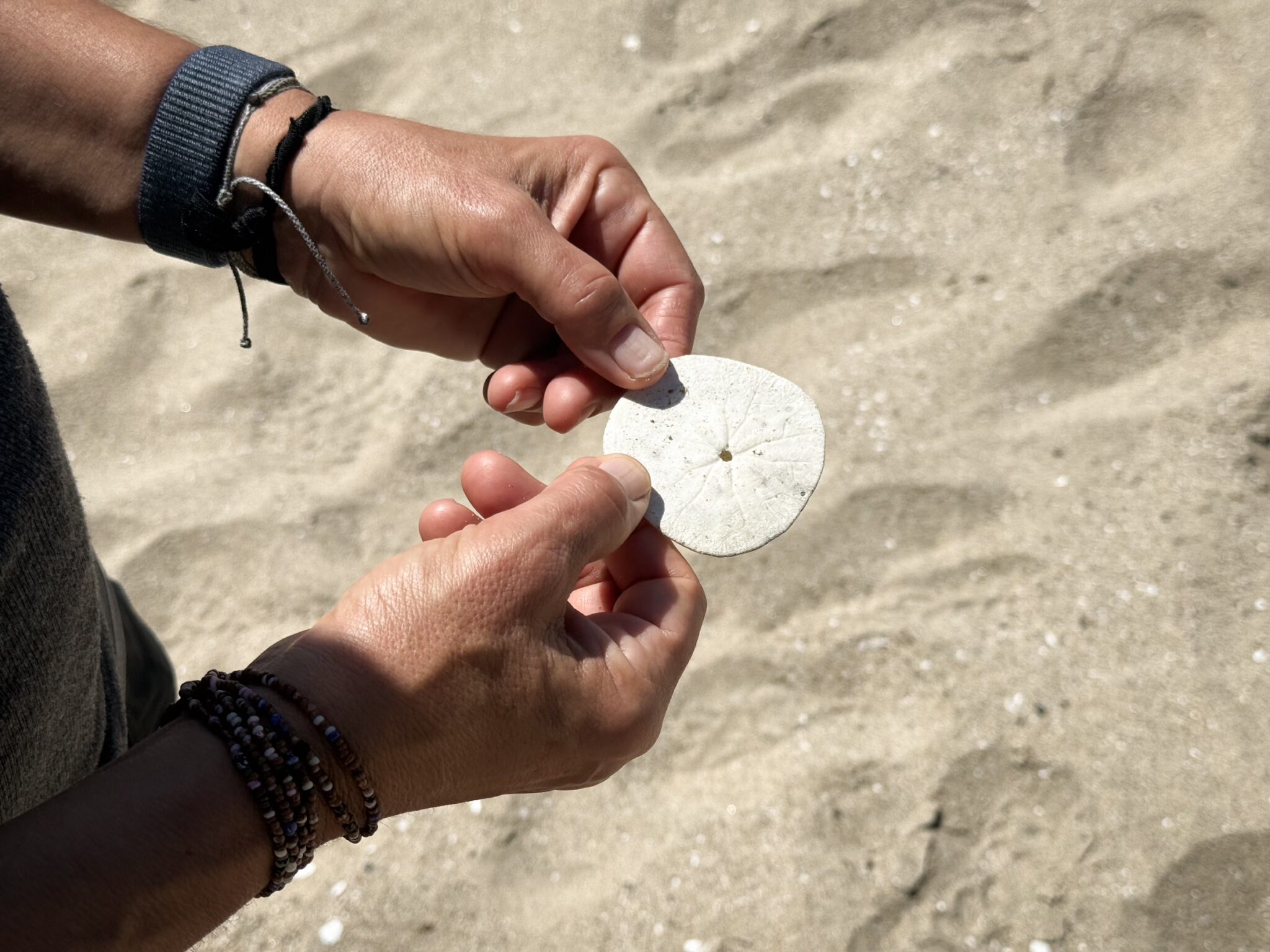
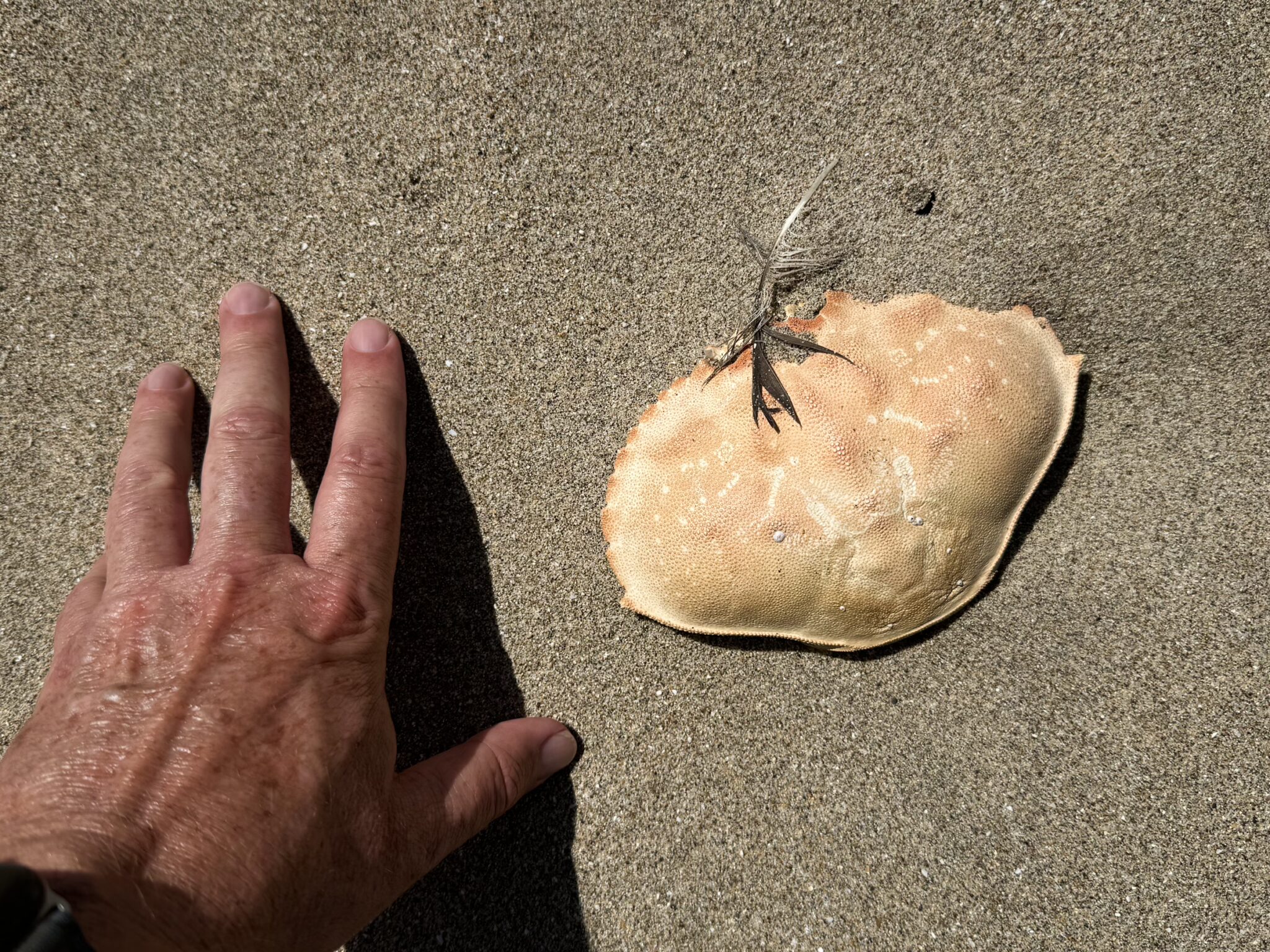
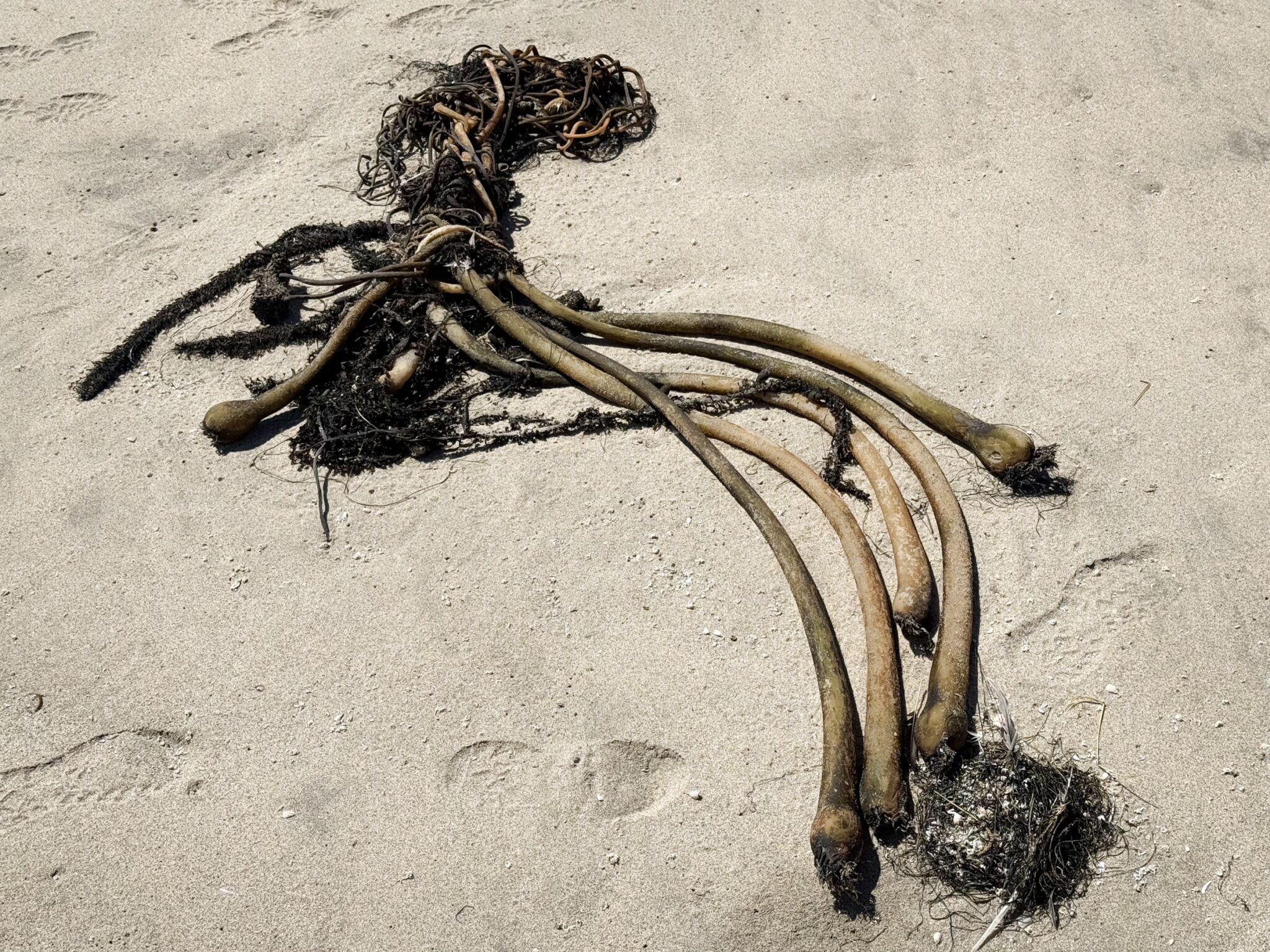
And many intact sand dollars, unusual along the coast here where the pounding surf easily destroys anything so fragile. Likewise, the crab shell is not only intact but unusually large for our area. The bullwhip kelp is a seaweed common around here. When I first moved here, I assumed the bulbous part was part of what anchors the plant to the ocean floor, but that is exactly backwards. The end is gas filled and rises in the water, with the other end anchored, keeping the seaweed erect in the swaying seas.
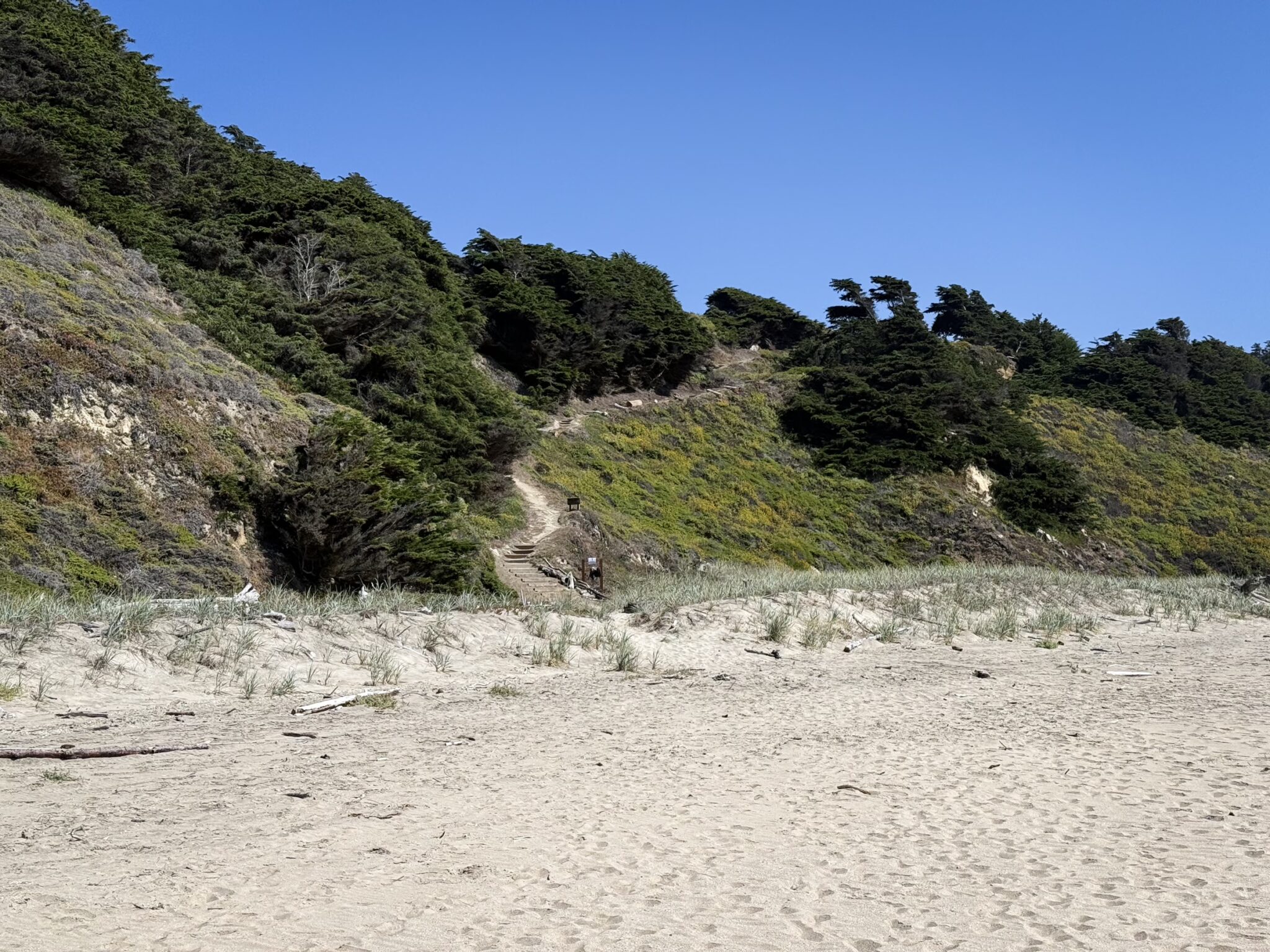
To get back to the lower parking lot, our choice was to walk around the point or go back up the bluff trail. We went up.